Application cases · Mesh-belt furnace loading
Frame Workpiece Loading onto a Mesh-Belt Furnace
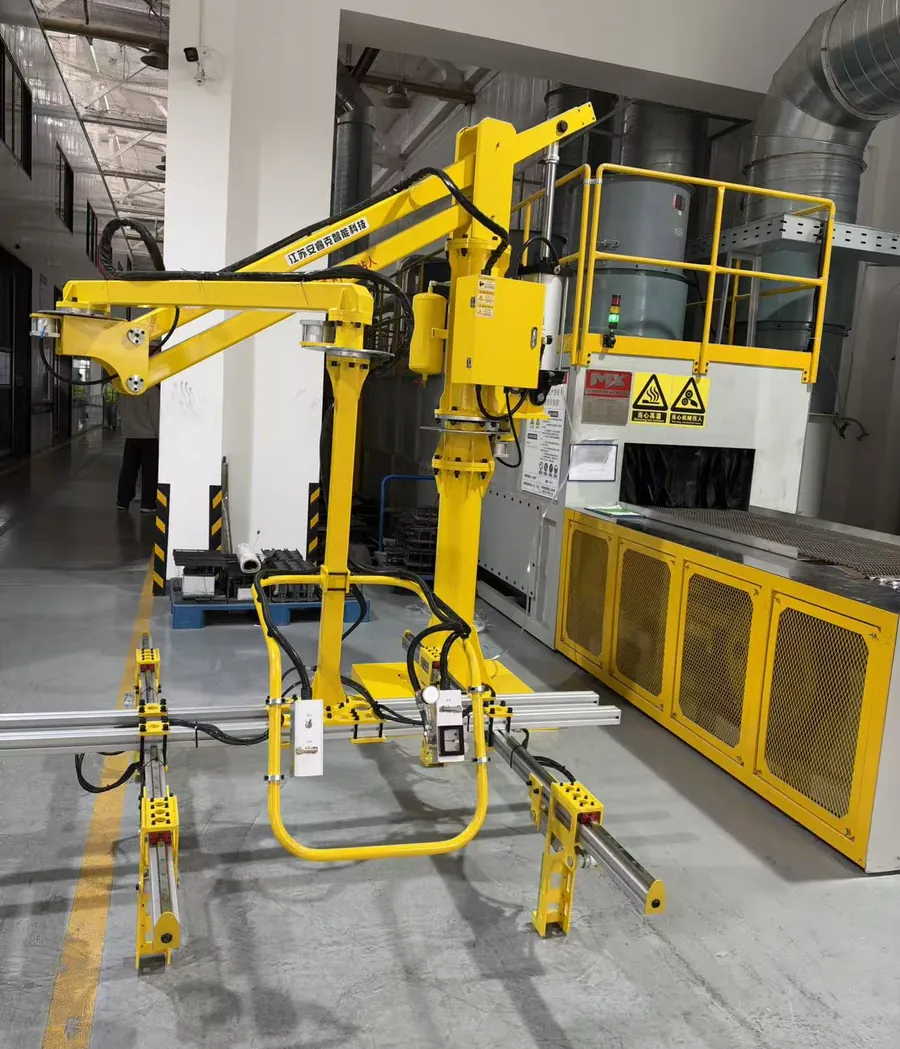
A column-mounted pneumatic industrial manipulator with adjustable frame-type pneumatic tooling picks stacked frame workpieces one by one from pallets and places them flat on the infeed conveyor of a mesh-belt furnace. One operator guides each part with the handle, reducing manual lifting of large parts.
- Equipment arrangement
- Column-mounted pneumatic industrial manipulator (150 kg rated load)
- Tooling
- Adjustable frame-type pneumatic tooling
 Mesh-belt furnace loadingWatch on-site video
On-site video
On-site footage · Click to play
Pallet Pick-up and Belt Loading
A column-mounted pneumatic industrial manipulator with adjustable frame-type pneumatic tooling picks stacked frame workpieces one by one from pallets and places them flat on the infeed conveyor of a mesh-belt furnace. One operator guides each part with the handle, reducing manual lifting of large parts.
- Workpiece: frame workpieces stacked on pallets
- Equipment: column-mounted pneumatic industrial manipulator + adjustable frame-type pneumatic tooling
- Motions: clamping, lifting, transfer and placement on the mesh belt
Application overview
The frame workpieces are large and arrive stacked on pallets. Each one has to be lifted off the stack and set down flat on the infeed conveyor of a mesh-belt furnace. Handled manually, this usually takes more than one person, involves frequent bending and makes accurate placement on the belt difficult. AUREK installed a column-mounted pneumatic industrial manipulator beside the furnace infeed and paired it with adjustable frame-type pneumatic tooling: clamp blocks on aluminum profile beams and guide rails are positioned to suit the workpiece size, and after pneumatic clamping the manipulator carries the load. The operator clamps and releases through the control box on the handle while guiding the part from the pallet to its position above the belt.
System configuration
| Workpiece | Frame workpieces stacked on pallets |
|---|---|
| Equipment arrangement | Column-mounted pneumatic industrial manipulator, 150 kg rated load |
| Tooling | Adjustable frame-type pneumatic tooling (aluminum profile beams with clamp blocks adjustable along guide rails) |
| Main motions | Aligning, clamping, lifting, transfer, placement and release |
| Operation | One operator guides the handle and clamps or releases through the control box on the handle |
| Workstations | Mesh-belt furnace infeed loading and pick-up from stacked pallets |
Configuration features
- The frame tooling is built on aluminum profile beams and guide rails. Several clamp blocks are positioned along the rails to grip the workpiece at multiple points, keeping large parts level during lifting and transfer.
- Clamp and release switches and a pressure gauge are integrated on the operating handle, so the operator completes each pick and place while guiding the part, with less bending and two-person lifting.
- The column-mounted unit stands beside the furnace infeed, and its slewing range covers both the stacked pallet and the belt infeed area, so pick-up and loading are done at one workstation.
Operating sequence
- Guide the tooling over the top workpiece on the pallet, align it with the gripping positions and lower it until the clamp blocks sit against the workpiece frame.
- Clamp pneumatically using the control box on the handle. Check that every clamp block is engaged and the air pressure is normal, then lift slowly.
- Keep the workpiece level and guide the manipulator to swing and travel above the belt infeed area, staying clear of the furnace opening and surrounding equipment.
- Align with the placement position on the belt and lower slowly. Once the workpiece rests flat on the belt, release the clamps, raise the tooling and return to the pallet for the next part.
Selection and configuration
- The number, position and contact faces of the clamp blocks are configured for the workpiece outline, frame structure and permitted gripping areas; the adjustable rails help cover several sizes.
- Rated load and working radius are selected for the combined weight of workpiece and tooling, pallet stack height and belt infeed height. The unit in this application has a 150 kg rated load.
- When installed next to heating equipment, the furnace opening, guardrails and piping are checked to plan the slewing range and handling path, with travel limits added where needed.
Frequently asked questions
Can one set of tooling handle frame workpieces of different sizes?
The clamp blocks are adjustable along the guide rails and suit different lengths and widths within the designed adjustment range. Beyond that range, or where gripping areas change significantly, quick-change tooling or dedicated clamp blocks can be configured.
What needs to be checked when installing the manipulator beside a mesh-belt furnace?
Confirm the column foundation and anchoring conditions, check the furnace opening, guardrails, piping and belt height, and plan the slewing angle and handling path. Release the tooling only after the workpiece rests stably on the belt.
More cases
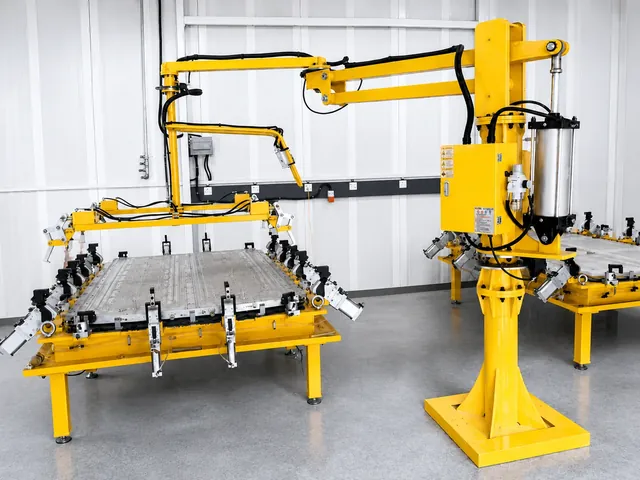 Battery enclosure handlingAutomotive Cover Panel and Battery Enclosure Welding Handling ApplicationA column-mounted pneumatic industrial manipulator with custom welding-handling tooling assists with gripping, transferring and positioning automotive cover panels and battery enclosure components, connecting loading and unloading operations around the welding fixture.
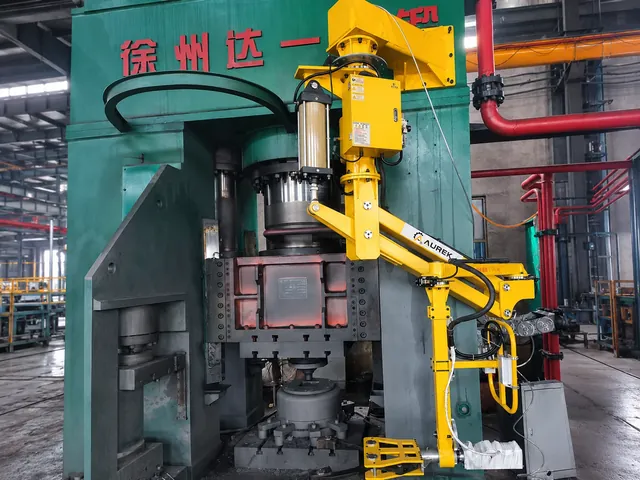 Hot casting handlingThermally Insulated Transfer of Hot Iron CastingsAn overhead-mounted pneumatic industrial manipulator with custom thermally insulated tooling grips, lifts and transfers castings weighing approximately 65 kg at approximately 250℃ between workstations, reducing direct manual support of hot workpieces.
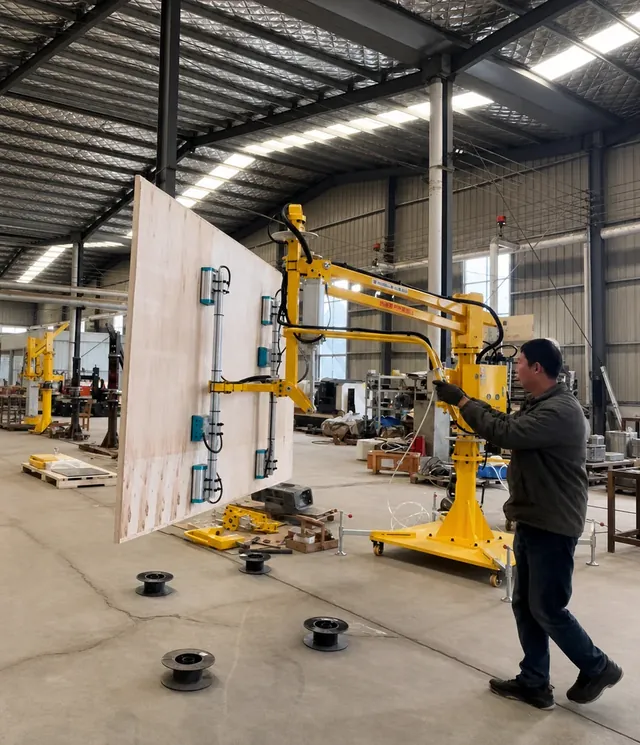 Large-panel turningOn-site videoLarge Panel Vacuum Handling and Turning ApplicationA pneumatic industrial manipulator with vacuum turning tooling for panels uses multiple suction points to lift, turn through 90° and transfer large panels. One operator guides the change between horizontal and vertical orientations.
Submit your requirements, get a technical proposal
Share the workpiece name, weight per workpiece, dimensions and pick-and-place motions, and an engineer will recommend a manipulator arrangement, working range and end tooling. Drawings and site photographs can be sent by email or WeChat.