Solutions · Heavy and special workpieces
Handling Solutions for Workpieces of 50 kg, 100 kg and Above
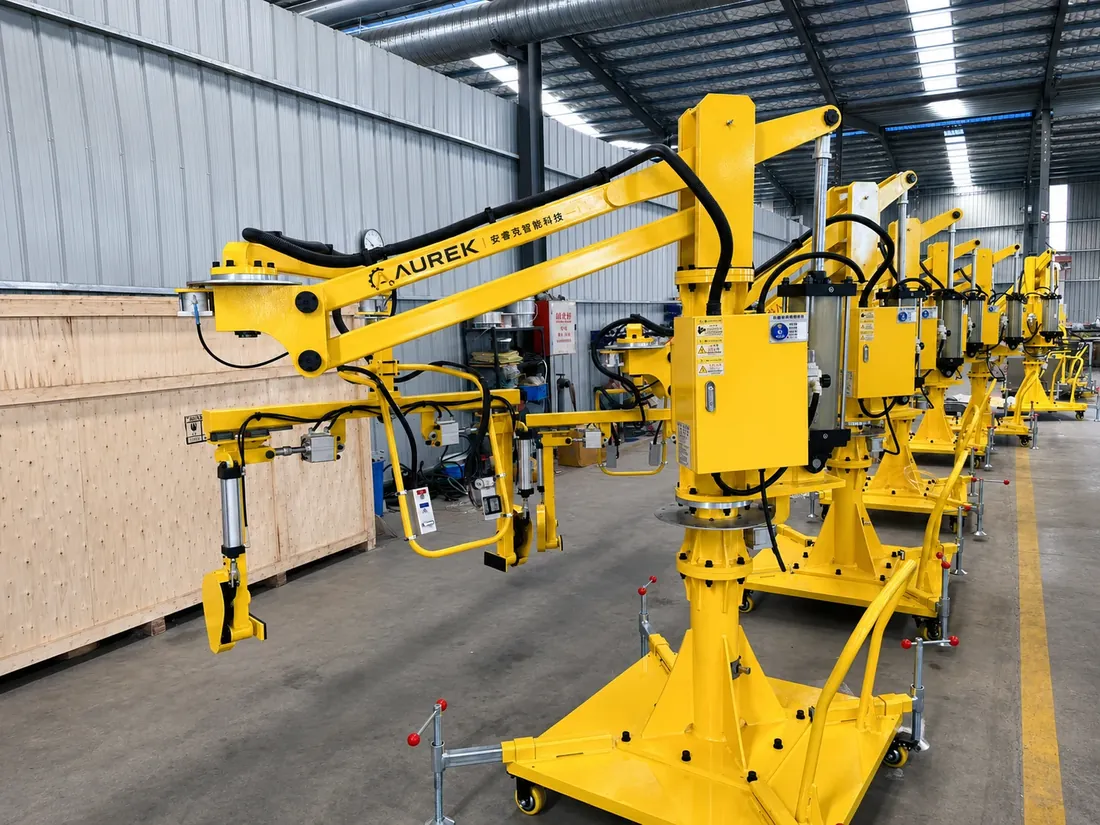
A pneumatic industrial manipulator and dedicated tooling assist with lifting, transfer and fixture alignment of heavier workpieces. The manipulator carries the handling load while the operator guides the workpiece using a handle, reducing repetitive lifting and sustained manual support.
 Heavy and special workpieces
Solution overview
A heavy-workpiece handling system comprises the manipulator, mounting structure and dedicated tooling. Selection considers the combined workpiece and tooling weight, center of gravity, working radius and lift stroke so that equipment capacity matches the handling path, orientation changes and workstation space.
First secure the workpiece by clamping or vacuum gripping, then use the manipulator to assist with lifting and transfer. Release the tooling after the workpiece is supported at its target position. Turning and rotation can be provided by suitable end mechanisms.
Solution configuration
| Load selection | For workpieces of 50 kg, 100 kg and above; rated capacity selected for the workpiece and tooling weight, center of gravity and working range |
|---|---|
| Key parameters | Weight, dimensions, center of gravity, lifting height, working radius and cycle time |
| Common workpieces | Motor stators, automotive seats, sheet-metal parts, panels, boxes, hot castings and equipment components |
| Mounting options | Column, overhead, mobile-base or rail mounting available |
| Tooling options | Vacuum gripping, jaws, external clamps, hooks, air-expanding shafts or turning tooling available |
Handling requirements for heavy workpieces
- Repetitive lifting and prolonged support increase the manual workload, making mechanical assistance suitable for carrying the handling load.
- Pick-and-place involves both position and orientation changes, requiring consideration of the gripping method, center of gravity and target support position.
- Appearance-sensitive surfaces or weak structures restrict the available gripping areas. Tooling contact structures need to match the workpiece's load-bearing areas.
- Loading and unloading space is often constrained by worktops, machine openings and surrounding mechanisms. The handling path needs operating space and clearance.
Equipment functions and operation
- The manipulator assists with supporting the workpiece weight while the operator uses a handle to guide lifting, transfer and alignment with the target position.
- Dedicated tooling engages the workpiece's load-bearing areas. Contact materials can be selected for surface-protection requirements.
- Column or overhead mounting can be selected for fixed operating positions. Mobile equipment is repositioned while unloaded and operated after the base is positioned and secured.
- Turning and rotation mechanisms can be selected for the target orientation, changing the workpiece orientation while maintaining the clamp or vacuum grip.
Selection and configuration considerations
- Load configuration: select the main structure and rated capacity for the workpiece and tooling weight, dimensions and center of gravity.
- End tooling: choose gripping structures for the permitted contact areas, and select turning, rotation or positioning-assist mechanisms for the pick-and-place orientations.
- Working range: the manipulator radius and lift stroke cover the pick-and-place positions while clearing machine openings and surrounding structures.
- Installation: match the mounting structure, air supply and electrical supply to the equipment arrangement, and connect the handling path to the workstation sequence.
Frequently asked questions
How is a manipulator selected for a 100 kg workpiece?
Start with the combined workpiece and tooling load, then consider the center of gravity, working radius, lift stroke and turning motions when selecting the main structure. Choose a configuration that covers the load and motion requirements of the application.
How does a pneumatic industrial manipulator differ from a robot?
An operator guides the handling path of a pneumatic industrial manipulator while the equipment assists with carrying the load. This suits loading, unloading and assembly with operator involvement. Industrial robots use programmed motions and are commonly used on automated lines with more standardized workpieces and processes.
Is a system suitable for just one or two workstations?
A system can be configured for one or a small number of workstations. Column mounting suits fixed positions; overhead mounting is an option where overhead load-bearing conditions are available and floor space is limited. A mobile configuration can be shared at different times, with unloaded repositioning and operation after the base is in position.
Related cases
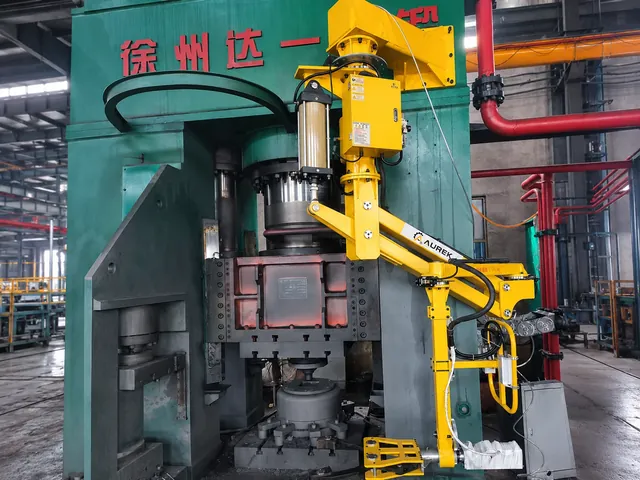 Hot casting handlingThermally Insulated Transfer of Hot Iron CastingsAn overhead-mounted pneumatic industrial manipulator with custom thermally insulated tooling grips, lifts and transfers castings weighing approximately 65 kg at approximately 250℃ between workstations, reducing direct manual support of hot workpieces.
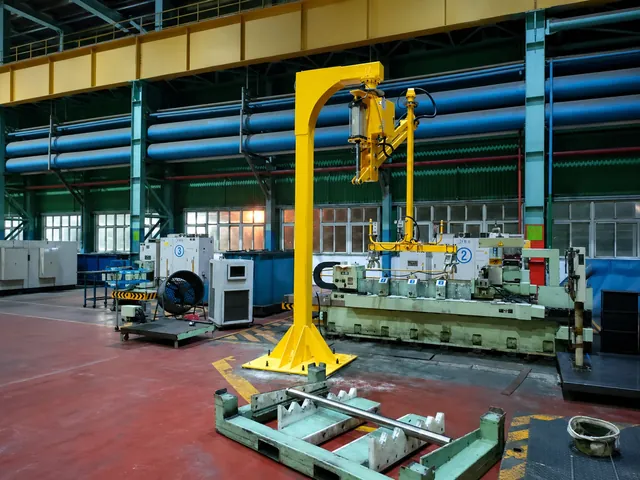 Work roll handlingWork Roll Handling for Grinder Loading and UnloadingAn overhead-mounted pneumatic industrial manipulator with adjustable tooling assists with gripping, lifting and loading or unloading work rolls at grinding equipment, reducing floor occupancy. The operator guides the roll toward the fixture and adjusts its placement position.
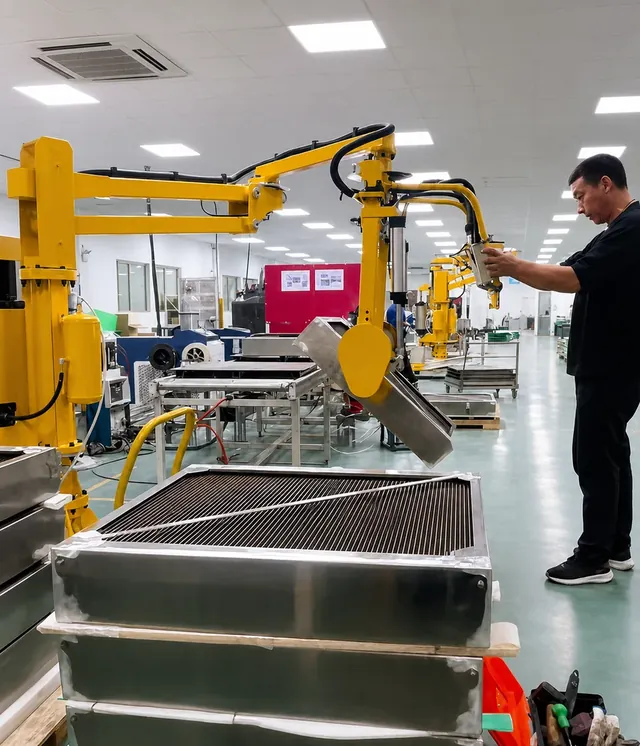 Metal workpiece turningOn-site videoLarge Metal Workpiece Handling and Turning ApplicationA pneumatic industrial manipulator with custom clamping and turning tooling carries the lifting load of large metal workpieces and turns and positions them while maintaining the grip. One operator guides pick-and-place and orientation changes.
Submit your requirements, get a technical proposal
Share the workpiece name, weight per workpiece, dimensions and pick-and-place motions, and an engineer will recommend a manipulator arrangement, working range and end tooling. Drawings and site photographs can be sent by email or WeChat.