Application cases · Automotive seat handling
Automotive Seat Assembly and Transfer Application
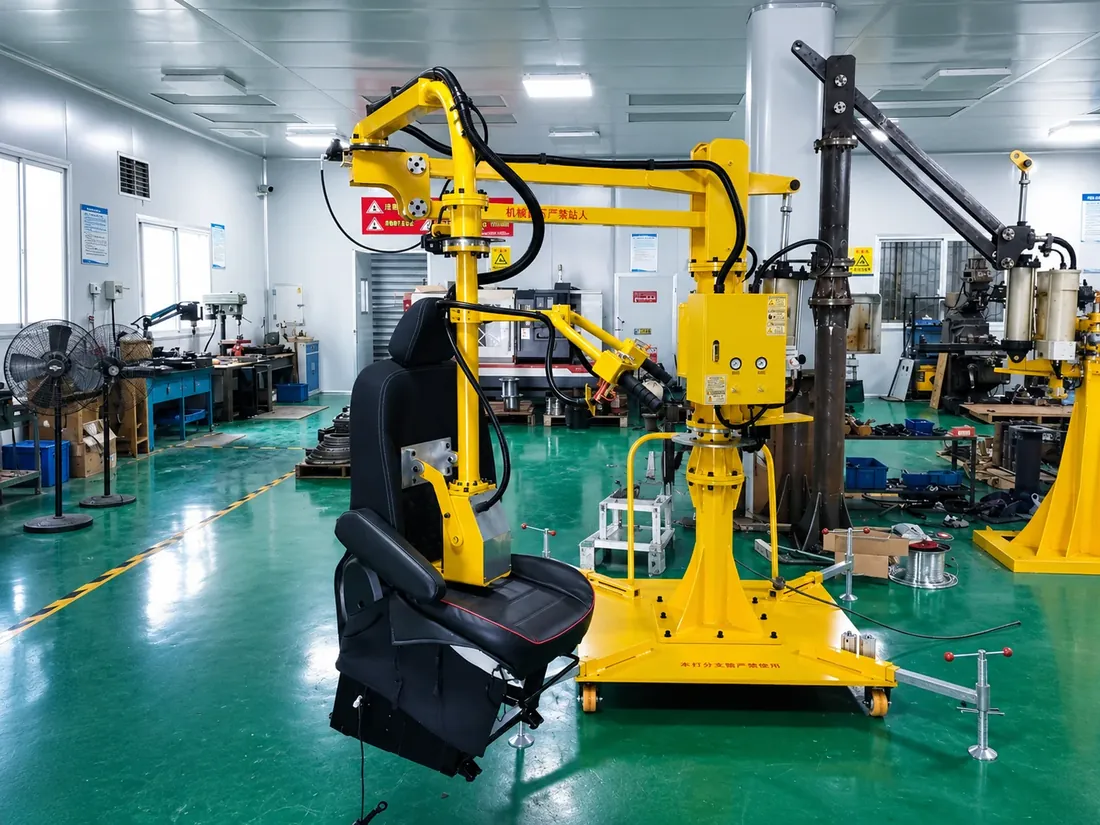
A mobile-base pneumatic industrial manipulator with dedicated seat tooling assists with gripping, lifting, horizontal transfer and assembly alignment of seat assemblies. It reduces manual carrying and support at seat-assembly and final-assembly transfer stations.
- Equipment arrangement
- Mobile-base pneumatic industrial manipulator
- Tooling
- Dedicated seat tooling
 Automotive seat handling
Application overview
Automotive seat assemblies are bulky, and handling must account for appearance-sensitive surfaces, functional components and assembly orientation. This system combines a mobile-base pneumatic industrial manipulator with dedicated seat tooling. The equipment operates after its base is positioned and secured at the workstation. The tooling engages the seat's load-bearing areas, the manipulator assists with carrying its weight, and the operator guides pick-and-place, transfer and assembly alignment.
System configuration
| Workpiece | Automotive seat assemblies |
|---|---|
| Workpiece characteristics | Bulky assemblies requiring surface protection and control of assembly orientation |
| Equipment arrangement | Mobile-base pneumatic industrial manipulator |
| Tooling | Dedicated seat tooling |
| Main motions | Gripping, lifting, horizontal transfer, assembly alignment and placement |
| Operation | The operator guides the manipulator after the mobile base is positioned and secured at the workstation |
| Workstations | Seat assembly, automotive final assembly and seat-transfer stations |
Configuration features
- Dedicated seat tooling places contact and support structures around load-bearing areas, reducing the need for operators to hold appearance-sensitive surfaces and functional components directly.
- The manipulator assists with supporting the seat weight while the operator guides pickup and alignment using a handle, reducing repetitive lifting and sustained manual support.
- The mobile base allows the equipment to change operating positions while unloaded. Assembly and transfer begin at the corresponding workstation after the base is positioned and secured.
Operating sequence
- Move the unloaded equipment to the operating position and secure the base, then guide the seat tooling to the pickup position.
- Align with the seat's load-bearing areas, clamp and check the grip, then slowly lift the seat clear of its support.
- Use the handle to guide horizontal movement while maintaining the required assembly orientation. Align slowly as the seat approaches the target position.
- Place the seat onto its support or assembly position. Release the grip after the seat is supported, then withdraw the tooling from the work area.
Selection and configuration
- Seat tooling can use external clamps, locating supports or combined structures, with contact positions and protective materials configured for the seat structure.
- Adjustable locating mechanisms or quick-change tooling can be selected for different seat models, using suitable contact structures for the chosen size range.
- Column mounting is another option for fixed operating positions. Mobile-base dimensions and manipulator coverage can be selected to suit workstation aisles.
Frequently asked questions
How is the mobile equipment moved between workstations?
First place the seat down and unload the equipment. Move it to the next workstation, position and secure the base, then begin the next handling cycle. Organize operation around the handling path at each workstation.
How is changeover handled between seat models?
Adjustable locating mechanisms or quick-change tooling can be selected. During changeover, adjust to the relevant seat's load-bearing positions or fit its dedicated tooling, then use the pick-and-place and assembly orientations for that model.
More cases
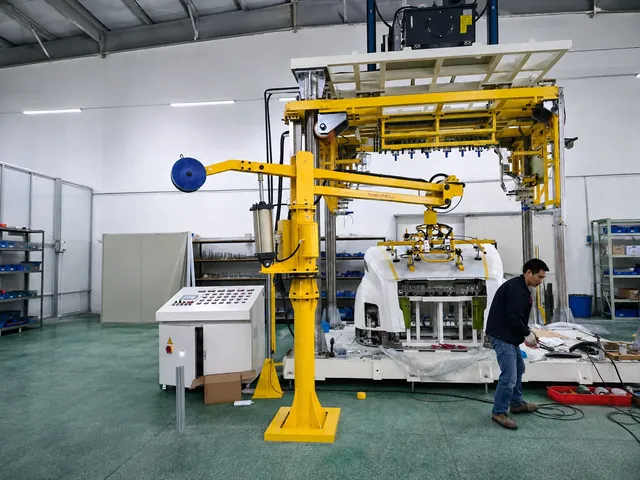 Automotive interior handlingAutomotive Headliner Turning and Assembly ApplicationA column-mounted pneumatic industrial manipulator with large-area vacuum tooling supports automotive headliners at multiple suction points for lifting, horizontal movement, turning and assembly alignment, reducing the burden of manually supporting large parts.
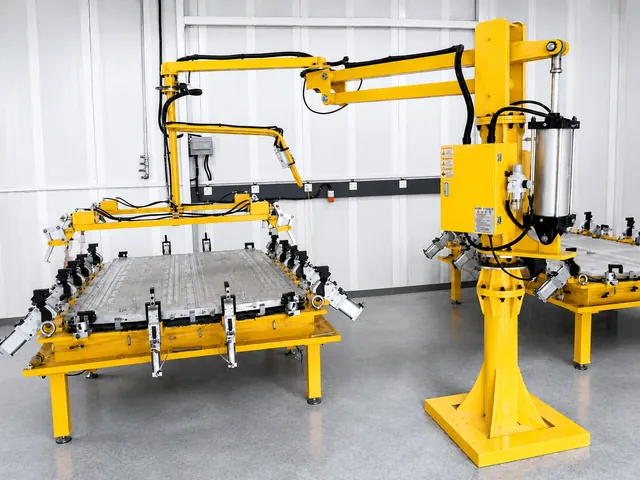 Battery enclosure handlingAutomotive Cover Panel and Battery Enclosure Welding Handling ApplicationA column-mounted pneumatic industrial manipulator with custom welding-handling tooling assists with gripping, transferring and positioning automotive cover panels and battery enclosure components, connecting loading and unloading operations around the welding fixture.
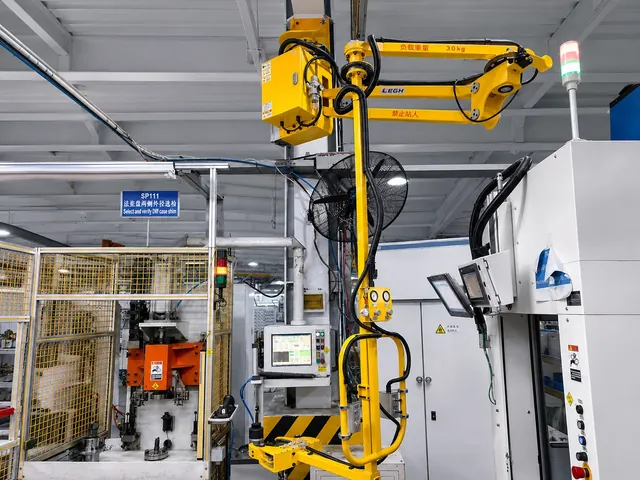 Motor stator handlingMotor Stator Handling and Transfer Between WorkstationsAn overhead-mounted pneumatic industrial manipulator with internal-expansion tooling picks stators through their bore and assists with lifting, horizontal movement and assembly positioning. It reduces repetitive manual support while leaving floor space available at fixed workstations.
Submit your requirements, get a technical proposal
Share the workpiece name, weight per workpiece, dimensions and pick-and-place motions, and an engineer will recommend a manipulator arrangement, working range and end tooling. Drawings and site photographs can be sent by email or WeChat.