




Pneumatic Industrial Manipulator Selection Guide
Understand the selection logic for load capacity, working radius, lift stroke, tooling, and mounting method, and quickly identify the appropriate equipment configuration.
A central English library of product manuals, engineering guides, checklists, and engineering studies for the design, installation, commissioning, and maintenance of pneumatic industrial manipulators and industrial handling systems. Public resources can be read online or downloaded; structures and specifications for custom projects are governed by the technical documents agreed by both parties.
Showing 50 resources
Understand the selection logic for load capacity, working radius, lift stroke, tooling, and mounting method, and quickly identify the appropriate equipment configuration.
A complete guide to equipment structure, operating procedures, daily-use practices, and safety precautions, suitable for operator use and training.
A step-by-step site checklist for verifying floor load capacity, working space, air-supply conditions, material-handling routes, and safety clearances before installation.
Daily pre- and post-operation inspection items and record sheet to help identify abnormalities promptly and keep equipment operating reliably.
Guidance on diagnosing and correcting common mechanical faults involving the arm, counterweight, rotary joints, brakes, and related components.
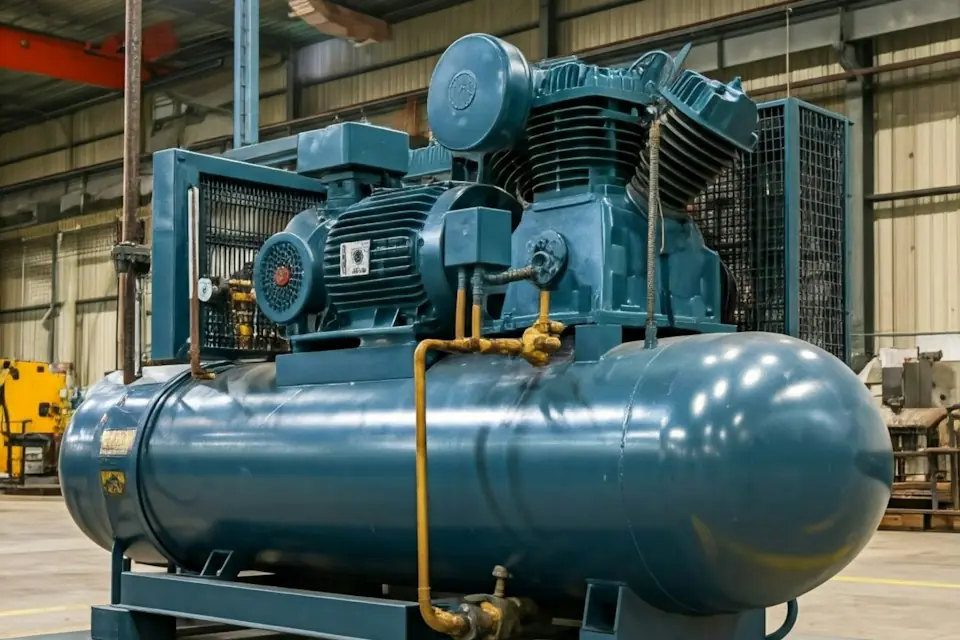
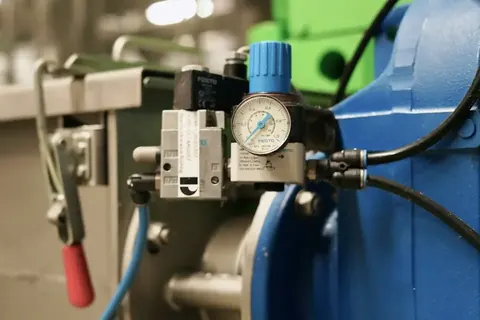
Troubleshooting procedures and corrective recommendations for common faults in air lines, cylinders, air receivers, and control components, enabling rapid on-site diagnosis.
Evaluate whether cartons, panels, and sheet-metal parts are suitable for vacuum handling based on surface condition, porosity, weight, and available suction area.
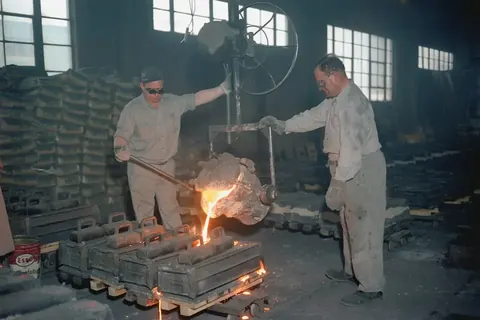
Design guidance on insulating grippers, high-temperature contact components, and pneumatic circuit protection for handling hot cast and die-cast workpieces.
Integrate plate thickness, gripping force, and safety margin in a single coupled framework, using three calculation examples, sensitivity analysis, and FMEA to support robust custom-gripper design.
Review the key conditions to verify before installation, from workpiece data and handling motions to site space, mounting method, foundation, air supply, and safety zones.
Foundation requirements for floor-mounted manipulators, covering floor load capacity, concrete condition, anchoring methods, embedded foundations, levelness, and working radius.
Follow the sequence "outer packaging → nameplate → main unit → tooling → pneumatic circuit → documents" to inspect pneumatic industrial manipulators and custom tooling on arrival.
A complete commissioning process covering installation verification, air-supply connection, no-load and loaded balancing, tooling, vacuum gripping, safety protection, and handover training.
Working with limited floor space and narrow aisles? Compare floor-mounted, overhead, rail-mounted, and mobile configurations and their key space-planning considerations.
Plan the installation location and prevent interference by considering pick-and-place points, working radius, lift stroke, rotation range, tooling dimensions, operator position, and aisles.
Manufacturer maintenance guidance on the common effects of leaking tubing and loose fittings, on-site inspection steps, troubleshooting tables, and daily preventive measures.
Manufacturer-led safety guidance covering prohibited or discouraged actions, correct practices, and pre-use checks for pneumatic industrial manipulators.
Explain how rated load, working radius, mounting method, custom tooling, safety features, and site modifications affect pricing for custom equipment and how to compare quotations.
The manipulator determines load capacity and reach; tooling determines grip stability, surface protection, and operating experience. Review suitable applications and verification points for each tooling type.
Compare use cases, benefits, and precautions for clamp, hook, vacuum, foam, internal-expansion, support, and tilting tooling to guide selection.
For short-cycle handling of workpieces at 650 °C, this study proposes an integrated composite-insulation and pneumatic-circuit protection design and compares options using equivalent thermal-conductivity calculations and thermal-structural finite element analysis.
Six structural concepts (A—F) and 36 prototypes underwent static-load, dynamic-disturbance, and 20,000-cycle endurance testing. Analysis of variance, regression, and composite scoring were used to identify an implementable lightweight design.
For air-loss protection in pneumatic handling grippers, this study proposes a "no unintended release on air loss; controlled release after recovery" design logic covering gripping-force calculations, mechanical self-locking, pneumatic pressure retention, leak detection, release interlocks, FMEA, and engineering validation.
Translate subjective impressions of whether operation feels "light, smooth, and stable" into measurable indicators such as operating force, drift after stopping, rebound, response delay, and end-effector inertia, with quantitative metrics, mechanical models, worked examples, test record sheets, and FMEA.
Gripper safety means more than holding the load—it also means preventing release at the wrong time. A load state machine (release permitted only in S6), a four-factor permit covering height/position/contact/load transfer, pneumatic-vacuum interlocks, air-loss protection, and FMEA establish the rule "no release outside permitted states."
Highly customized equipment with cross-domain functions cannot have all safety requirements summarized by a single standard or certificate. Starting from equipment classification, this article maps applicable standards and provides systematic factory-inspection, site-acceptance, and documentation-delivery checklists, with certification-boundary notes and FMEA.
Based on ergonomics and the NIOSH Revised Lifting Equation (RWL/LI), this study establishes a pathway for identifying, quantifying, rapidly classifying, and engineering out manual-handling risks, with a worked example, FMEA, and site observation sheet.
Before starting work, new operators should understand equipment components, permitted handling limits, pre-start checks, the standard eight-step operating procedure, prohibited actions, and abnormal-condition response. Includes an initial training sign-off checklist.
Ten categories for site acceptance, from appearance, structure, installation security, operating range, and air supply to no-load/loaded operation, tooling safety, cycle-time validation, and accompanying documents.
Common issues, on-site checks, replacement criteria, and spare-parts management recommendations for vacuum cups, foam pads, tubing, push-in fittings, seals, jaw pads, and other wear components.
Do not place a workpiece on equipment immediately after an extended shutdown. Check appearance, mechanics, air supply, vacuum system, tooling, safety functions, and no-load/low-load trial operation, with priorities based on shutdown duration.
Annual maintenance is a system-level inspection involving disassembly and testing. It covers mechanics, pneumatics, balancing, tooling, safety, fastening, and lubrication, with a quick-reference checklist and interval guidance.
Sinking, drifting, binding, rebound, or increased operating force is not "normal break-in." Stop and unload the equipment, then inspect the air supply, vacuum system, mechanics, tooling, and safety functions using the included fault table.
Longer is not always better. Learn how working radius relates to arm length and rotation angle, the drawbacks of excessive reach, how to determine the correct radius, the influence of mounting method, and what to verify on site.
A retrofit into an existing line requires more than checking whether the equipment physically fits. Process motions, installation foundation, operating envelope, air and power supplies, safety boundaries, shutdown window, and acceptance method must also be verified. This article covers the full process from site survey to production validation.
Mixed-model production does not mean unlimited compatibility from one gripper. This article explains how to design flexible handling solutions for automotive parts through part-family grouping, a common base unit, adjustable and quick-change tooling, model identification, parameter recipes, poka-yoke interlocks, and validation matrices.
For retrofits in automotive component and final-assembly lines, this study systematically identifies the workpiece, process, layout, foundation, utilities, adjacent equipment, safety, shutdown construction, and acceptance documentation to verify before adding a pneumatic industrial manipulator. Includes a site-survey checklist.
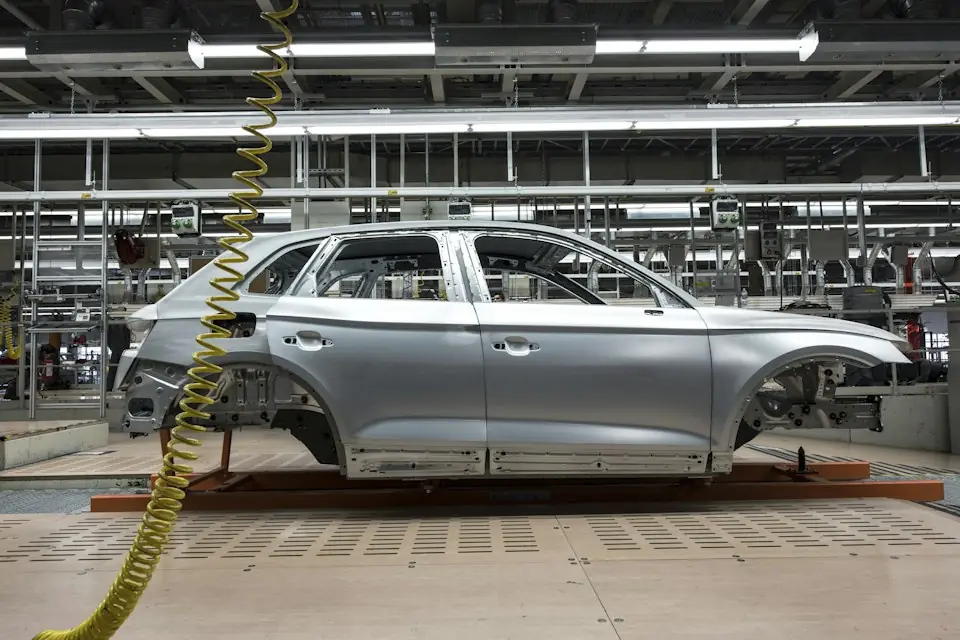
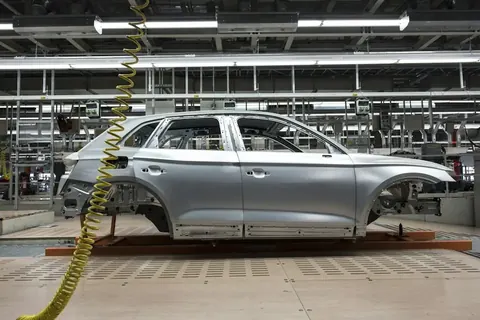
Automotive body-shop stations are crowded and involve many moving elements. This article explains how pneumatic industrial manipulators can avoid welding guns, locating pins, clamps, and safety fencing through static boundaries, dynamic envelopes, equipment layout, tooling approach paths, hose routing, state interlocks, and on-site trajectory validation.
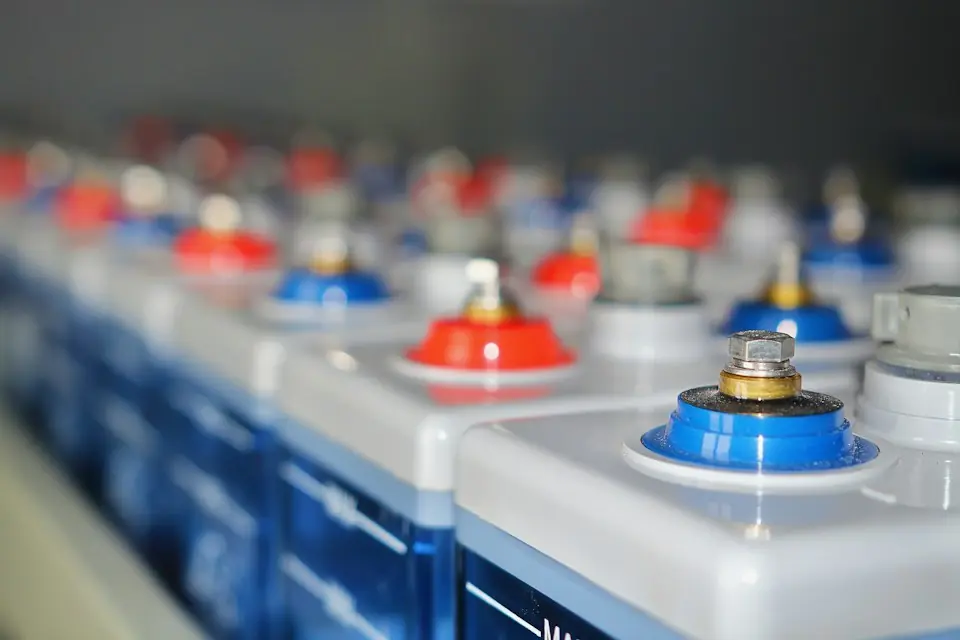
Handling traction-battery modules and packs involves weight, center of gravity, enclosure stiffness, electrical state, permitted contact areas, and placement confirmation. This article explains engineering considerations for load paths, tilting, positioning, state detection, unintended-release prevention, and validation.
Mixed-model battery-pack production requires alignment among vehicle model, tooling modules, mechanical locking, pneumatic/electrical interfaces, and control recipes. This article outlines product-family grouping, quick-change platforms, identification codes, poka-yoke interlocks, changeover procedures, and validation matrices.
A battery-handling station must separately assess loss of air, loss of power, insufficient vacuum, line rupture, and control failure. This article explains anti-drop design through fail-safe principles, mechanical retention, pneumatic/vacuum energy storage, state monitoring, controlled placement, recovery procedures, and fault validation.
Tire and wheel assembly involves picking, lifting, orientation adjustment, stud alignment, and return. Repetitive lifting can cause fatigue and disrupt cycle time. This article covers tooling types, workstation layout, multi-size compatibility, operating feel, and safety validation.
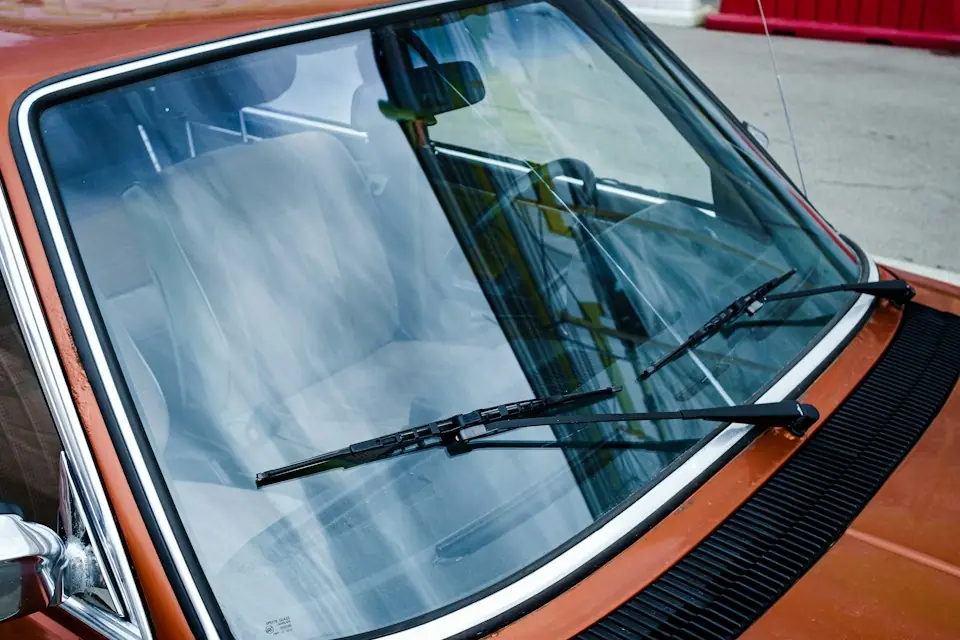
Windshields, panoramic roof glass, and side windows are well suited to vacuum handling, but curvature, size, coatings, edge protection, and assembly orientation require special consideration. This article covers suction-cup selection and layout, vacuum monitoring, tilting, alignment, surface protection, and production-sample validation.
For large automotive outer panels and thin-wall stampings, this study establishes a combined design method for normal suction, tangential slip resistance, plate/shell deformation, and surface protection, and provides sample calculations, a production-part validation matrix, FMEA, and engineering qualification limits.
Study sealing formation, all-orientation suction loads, dynamic tilting moments, vacuum zoning and reserve, surface and edge protection, fault injection, and validation using production-representative curved automotive glass samples.
For heavy battery-pack grippers, this study proposes an architecture based on geometric support, self-holding locks, supported-load release, multi-signal diagnostics, and safe recovery, with a fault-injection matrix, FMEA, and evidence-chain requirements.
Study module boundaries, six-axis interface loads, positioning and locking, utility connections, tool identification, poka-yoke state machines, changeover time, and full-combination validation for multi-model handling tooling.
A unified accounting method for pneumatic industrial manipulators, from standard air consumption per cycle and state–pressure–valve-position leakage baselines to annual electricity use, energy per workpiece, and life-cycle cost, with explicit criteria for data quality, grading, and payback.
Use RNLE to assess manual lifting before implementation and a force gauge plus RAPP to assess pushing, pulling, and guiding afterward, producing a before/after comparison and hard release criteria covering risk index, operating force, posture, cycle time, and worker population.
For corrugated cartons, bagged goods, and other porous surfaces, this study establishes a unified calculation and engineering-qualification method for vacuum gripping subsystems, covering effective holding force, leakage flow, vacuum build-up time, dynamic slip resistance, zoned failures, and emergency placement.
Need a catalog, drawing, or selection data for a specific model—or handling-solution information for a particular workpiece? Contact our engineering team, and we will assemble the relevant materials for your application.