
Product range · Custom tooling
Custom Handling Tooling and End-Effector Solutions
End tooling is designed around the workpiece shape, load-bearing areas and handling motions. Vacuum gripping, jaws, internal-expansion gripping, external clamping and turning structures are available.
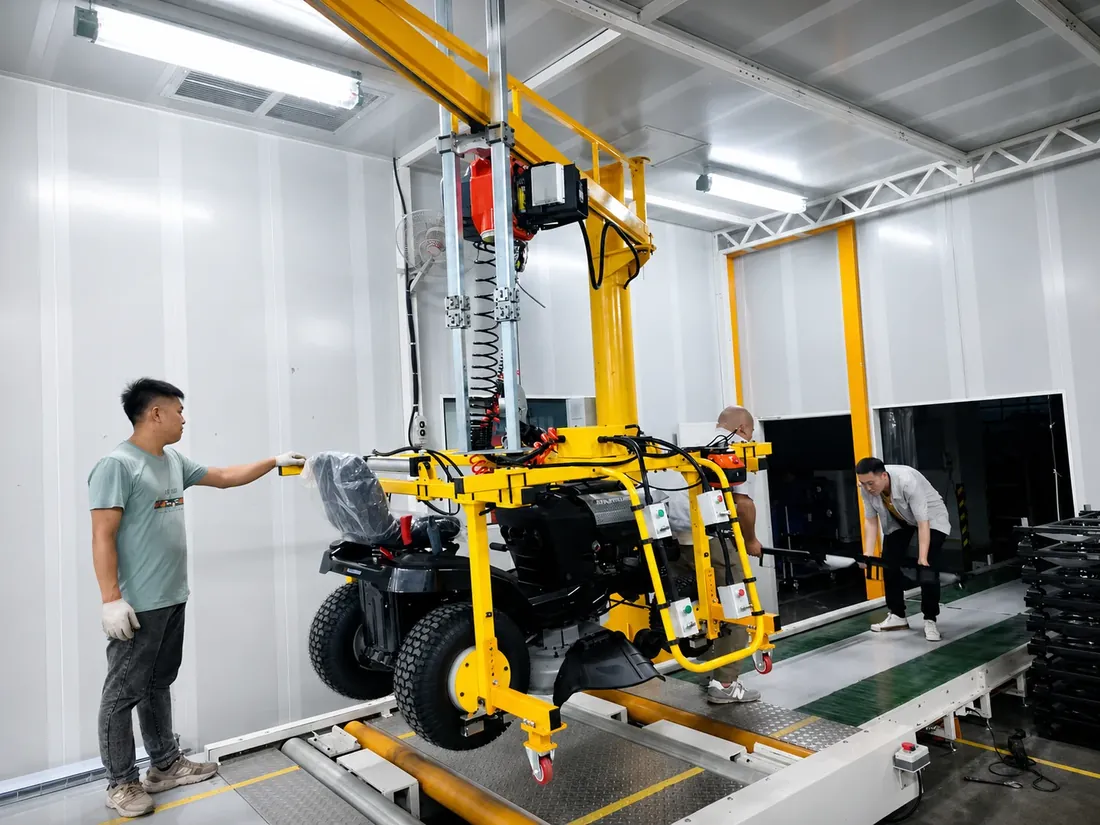 Custom tooling
Product overview
End tooling connects the handling equipment to the workpiece. Panels and boxes can use vacuum gripping; stators and reels can use internal-expansion gripping or external clamping; seats and hot castings can use dedicated contact and support structures.
Contact points are arranged around the workpiece's load-bearing areas, with the design accounting for the equipment interface, center of gravity and pick-and-place orientations. Rotation, turning, quick change and status sensing can be selected for the workstation functions.
Configuration and specifications
| Tooling types | Vacuum cups, mechanical jaws, external clamps, hooks, air-expanding shafts, internal-expansion grippers and turning mechanisms available |
|---|---|
| Design inputs | Workpiece weight, dimensions, material, center of gravity, surface condition and permitted contact areas |
| Supported motions | Pickup by clamping, vacuum gripping or internal expansion; optional rotation, 90° turning and assembly-assist structures |
| Suitable workpieces | Cartons, panels, automotive seats, motor stators, sheet-metal parts, hot castings and reels |
| Controls | Primarily pneumatic control, with optional electric drive and gripping-status sensing |
Matching the tooling to the workpiece
- Vacuum tooling can be selected for cartons, panels and sheet-metal parts with suitable gripping surfaces. The number and distribution of cups are matched to the workpiece area.
- Air-expanding shafts, internal-expansion grippers or external clamps can handle cylindrical workpieces and reels through load-bearing areas of the bore or outer circumference.
- Temperature-resistant contact components and thermal insulation are available for hot castings. The tooling arrangement provides the corresponding operating distance for the operator.
- Complex workpieces such as automotive seats and battery enclosures use dedicated tooling, with contact points and supports matched to their load-bearing areas.
Structural and functional options
- The gripping structure is configured for the workpiece load, center of gravity and orientation changes so that pickup, transfer and placement form a connected sequence.
- Larger contact areas and compliant contact materials are available for deformable or appearance-sensitive parts, distributing local loads and reducing hard contact.
- Turning tooling can be configured with suitable angles, drives and travel limits to change the workpiece orientation while maintaining the grip.
Frequently asked questions
Can custom tooling be supplied separately?
It can be supplied separately or together with a pneumatic industrial manipulator. For existing equipment, the tooling structure is designed to match the connection interface, load capacity and control method.
What surfaces are suitable for vacuum cups?
Suitable contact areas allow the cup to form an effective seal. Cup material and the vacuum source are selected for surface roughness, permeability and contamination. Mechanical gripping or support structures can be used where vacuum gripping is unsuitable.
How is tooling with a turning function used?
Align the gripping position and secure the workpiece, assist with lifting it, then change its orientation using the turning mechanism. After transfer to the target position and support of the workpiece, release the grip and withdraw the tooling.
Related cases
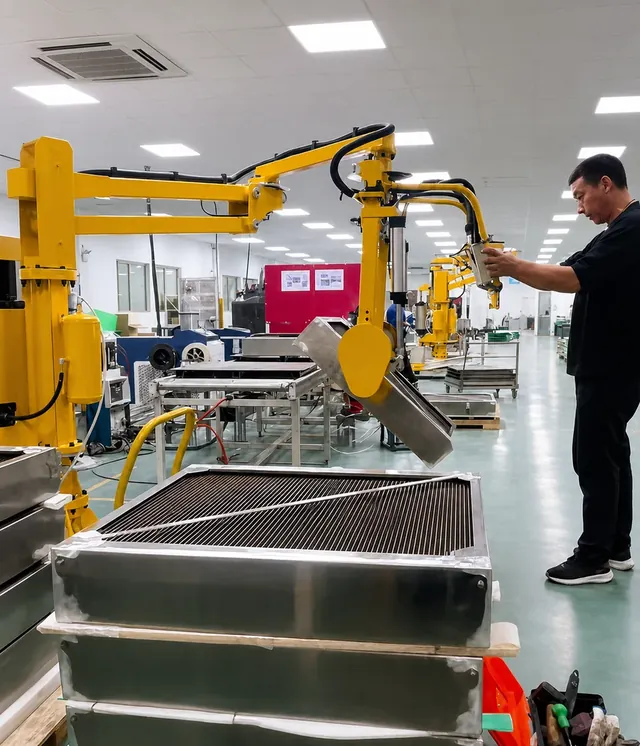 Metal workpiece turningOn-site videoLarge Metal Workpiece Handling and Turning ApplicationA pneumatic industrial manipulator with custom clamping and turning tooling carries the lifting load of large metal workpieces and turns and positions them while maintaining the grip. One operator guides pick-and-place and orientation changes.
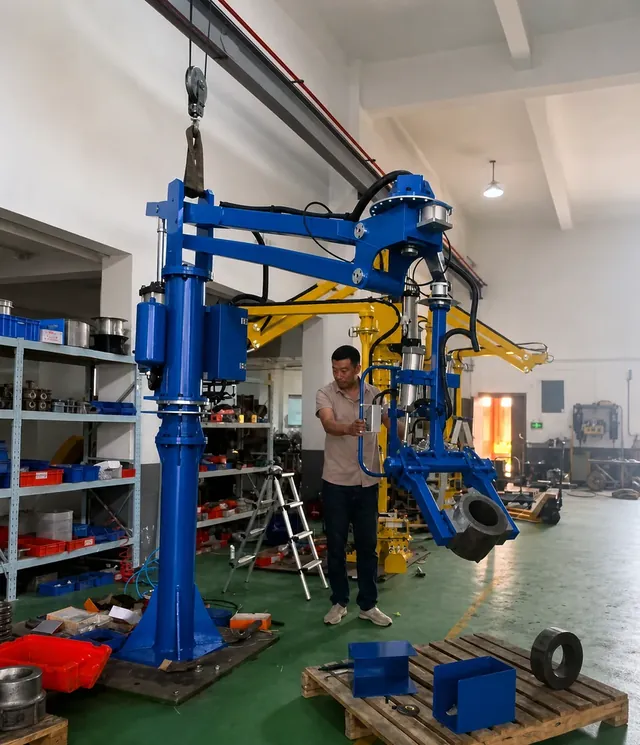 Ring turningOn-site videoRing Workpiece Handling and Turning ApplicationA pneumatic industrial manipulator with dedicated ring tooling lifts, transfers and turns ring-shaped workpieces while maintaining the grip. One operator guides orientation and position, reducing direct manual support and changes of hand position.
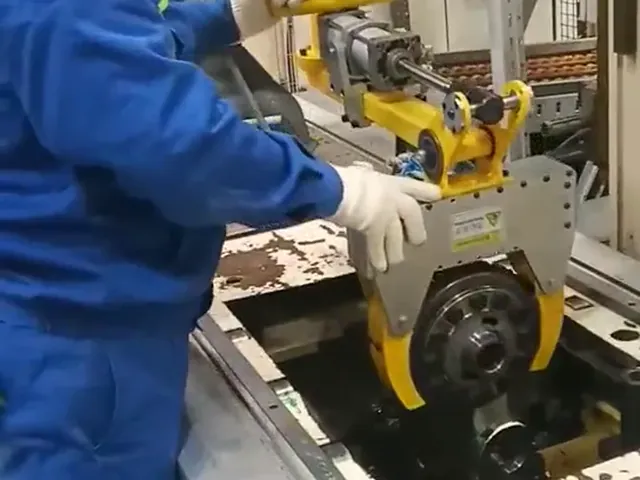 Workpiece turningOn-site videoDisc and Flange Turning, Loading and Unloading ApplicationA pneumatic industrial manipulator with custom clamping and turning tooling picks disc- and flange-shaped metal workpieces from inside equipment, withdraws, turns and places them, connecting loading and unloading with orientation changes between processes.
Submit your requirements, get a technical proposal
Share the workpiece name, weight per workpiece, dimensions and pick-and-place motions, and an engineer will recommend a manipulator arrangement, working range and end tooling. Drawings and site photographs can be sent by email or WeChat.