
Application cases · Ring turning
Ring Workpiece Handling and Turning Application
A pneumatic industrial manipulator with dedicated ring tooling lifts, transfers and turns ring-shaped workpieces while maintaining the grip. One operator guides orientation and position, reducing direct manual support and changes of hand position.
- Equipment arrangement
- Pneumatic industrial manipulator
- Tooling
- Dedicated ring tooling
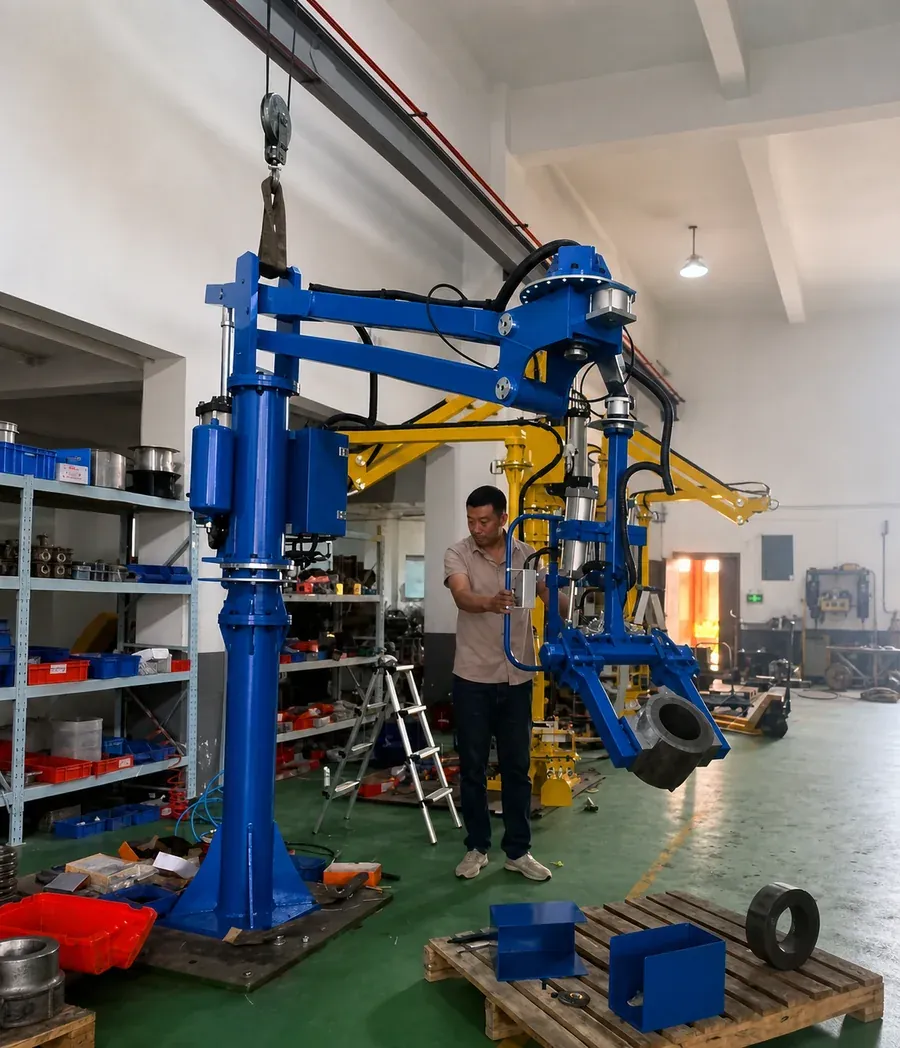 Ring turningWatch on-site video
On-site video
On-site footage · Click to play
Continuous Gripping and Orientation Changes
A pneumatic industrial manipulator with dedicated ring tooling lifts, transfers and turns ring-shaped workpieces while maintaining the grip. One operator guides orientation and position, reducing direct manual support and changes of hand position.
- Workpiece: ring-shaped workpieces
- Equipment: pneumatic industrial manipulator + dedicated ring tooling
- Motions: gripping, lifting, transfer, turning, positioning and placement
Application overview
Ring handling requires suitable gripping areas as well as consideration of the center of gravity and placement orientation after turning. A pneumatic industrial manipulator with dedicated ring tooling lifts, transfers and turns the workpiece while maintaining the grip. The operator guides the manipulator using handles, adjusts the workpiece orientation and approaches the target position, reducing direct manual support of the ring and changes of hand position during transfer.
System configuration
| Workpiece | Ring-shaped workpieces |
|---|---|
| Equipment arrangement | Pneumatic industrial manipulator |
| Tooling | Dedicated ring tooling |
| Main motions | Gripping, lifting, transfer, turning, positioning and placement |
| Operation | One operator guides the workpiece using operating handles |
| Gripping features | Handling and orientation changes while maintaining the grip |
Configuration features
- The dedicated tooling matches the ring's contact areas and maintains the grip during lifting and transfer, reducing direct manual support.
- The turning mechanism works with the manipulator's movement to change ring orientation while maintaining the grip, connecting transfer with alignment at the target position.
- One operator uses the handles to guide the workpiece through a connected lifting, transfer and placement sequence, reducing changes of hand position during handling.
Operating sequence
- Guide the dedicated ring tooling toward the workpiece, align the contact areas with the intended gripping positions, then engage the grip.
- Confirm the gripping status before assisting with lifting the ring clear of its original support, leaving space for the following transfer motions.
- Maintain the grip and guide the manipulator to transfer the ring. Use the turning mechanism to adjust the orientation while gradually approaching the target placement position.
- Align the ring with the target position and lower slowly. Release the tooling after the workpiece is supported, then guide the manipulator away.
Selection and configuration
- Suitable tooling contact structures can be selected for differences in bore diameter, outside diameter and thickness, matching the gripping positions to the ring profile of each size.
- Where contact surfaces require protection, suitable contact materials or protective structures can be selected to reduce direct hard contact between the tooling and workpiece.
- Suitable turning directions and mechanism arrangements can be selected for different loading and unloading orientations, connecting orientation changes with the target pick-and-place positions.
Frequently asked questions
Does the ring need to be released and gripped again during turning?
This system changes ring orientation using the turning mechanism while maintaining the grip. After the orientation change, continue guiding the workpiece toward the target position. Release the tooling only after placement and support.
Do changes in ring bore and outside diameter affect tooling selection?
Yes. Bore diameter, outside diameter, thickness and permitted contact areas determine the tooling's contact positions and structure. Contact components or dedicated tooling for the corresponding size can be selected to match the gripping method to the workpiece profile.
More cases
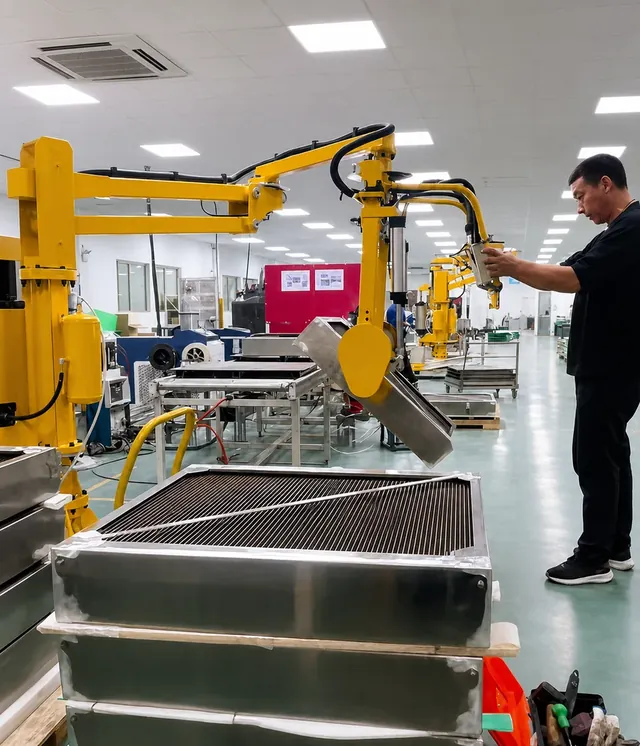 Metal workpiece turningOn-site videoLarge Metal Workpiece Handling and Turning ApplicationA pneumatic industrial manipulator with custom clamping and turning tooling carries the lifting load of large metal workpieces and turns and positions them while maintaining the grip. One operator guides pick-and-place and orientation changes.
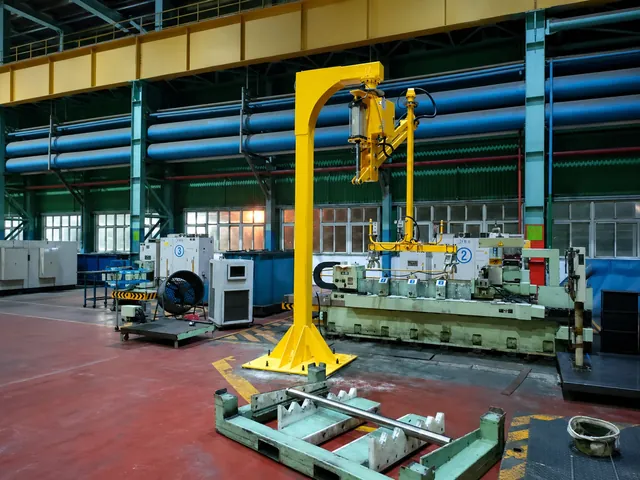 Work roll handlingWork Roll Handling for Grinder Loading and UnloadingAn overhead-mounted pneumatic industrial manipulator with adjustable tooling assists with gripping, lifting and loading or unloading work rolls at grinding equipment, reducing floor occupancy. The operator guides the roll toward the fixture and adjusts its placement position.
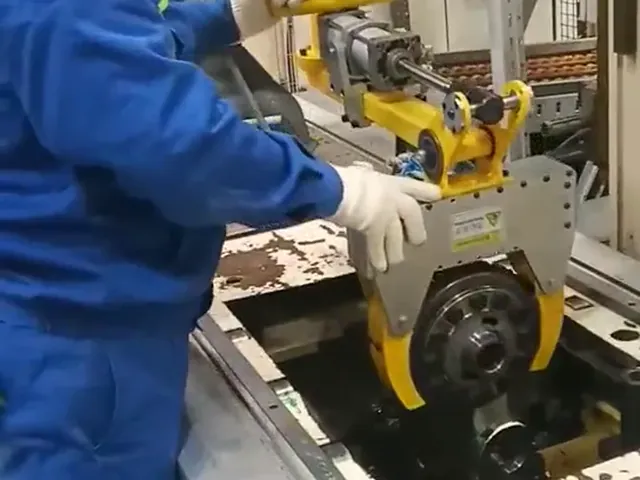 Workpiece turningOn-site videoDisc and Flange Turning, Loading and Unloading ApplicationA pneumatic industrial manipulator with custom clamping and turning tooling picks disc- and flange-shaped metal workpieces from inside equipment, withdraws, turns and places them, connecting loading and unloading with orientation changes between processes.
Submit your requirements, get a technical proposal
Share the workpiece name, weight per workpiece, dimensions and pick-and-place motions, and an engineer will recommend a manipulator arrangement, working range and end tooling. Drawings and site photographs can be sent by email or WeChat.