Product range · Pneumatic Industrial Manipulators
AUREK ARK Series Pneumatic Industrial Manipulators
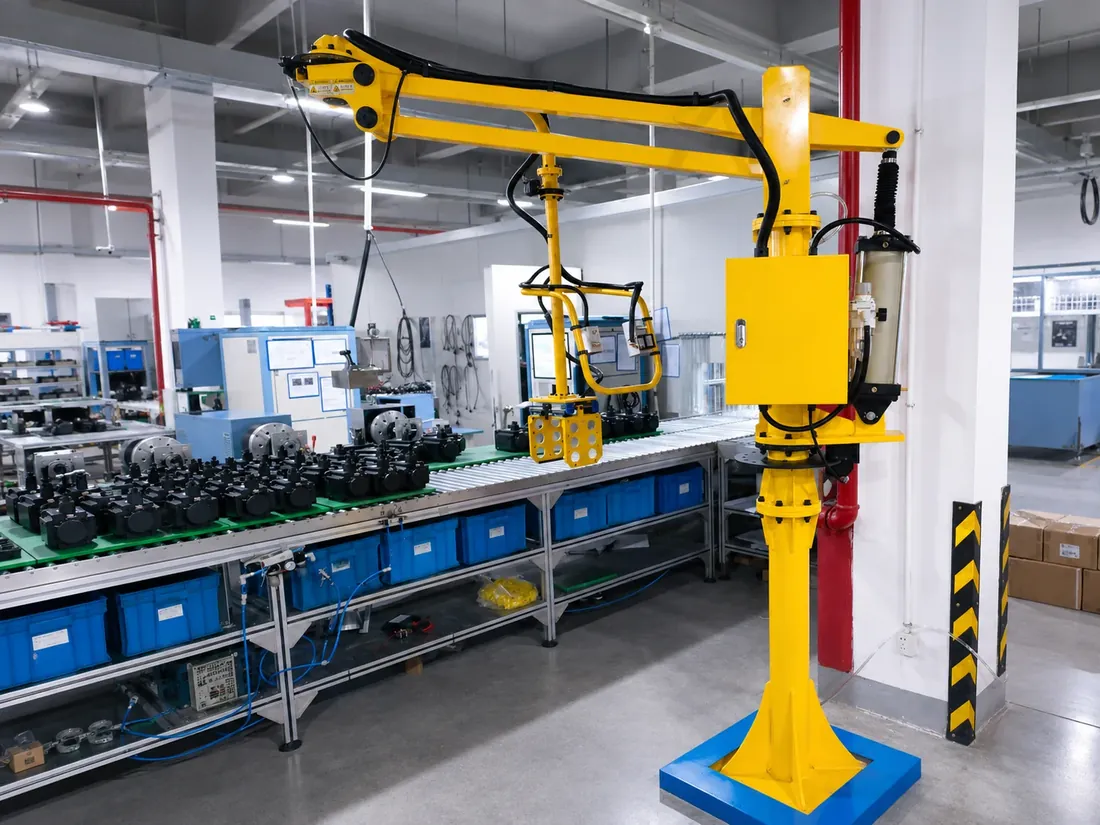
A pneumatic industrial manipulator assists with supporting the workpiece weight and works with suitable tooling for pick-and-place, lifting and transfer. Turning mechanisms and several mounting arrangements are available.
- Operating air pressure
- 0.5–0.8 MPa (5–8 bar)
 Pneumatic Industrial Manipulators
Product overview
ARK series pneumatic industrial manipulators assist with supporting the combined workpiece and tooling load. The operator uses a handle to guide lifting, horizontal movement and alignment, reducing repetitive manual support during machine loading and unloading, workstation transfer and assembly.
Column-mounted, overhead-mounted, mobile-base and rail-mounted arrangements are available, with tooling suited to the workpiece. Rotation or turning mechanisms can be fitted when the workpiece orientation needs to change.
Configuration and specifications
| Load capacity | Selected for the combined workpiece and tooling load, center of gravity and safety factor |
|---|---|
| Working radius | Configured for pick-and-place distances, the slewing range and workstation space |
| Lift stroke | Configured for the difference between pick-and-place heights, mounting height and motion path |
| Operating air pressure | 0.5–0.8 MPa (5–8 bar) |
| Mounting arrangement | Column, overhead, mobile-base and rail mounting available |
| Tooling options | Vacuum cups, grippers, external clamps, hooks, air-expanding shafts and turning tooling available |
Project selection and configuration
Load capacity, working radius and lift stroke are configured for the combined workpiece and tooling load, center of gravity and handling path. The mounting arrangement is selected for the workstation space. Pneumatic or electric drive is available; the pneumatic configuration commonly operates at 0.5–0.8 MPa. Dedicated structural designs can be used for heavy loads and special operating conditions.
| Configuration | Load capacity | Working radius | Lift stroke |
|---|---|---|---|
| Standard workstation configuration | Configured for the combined workpiece and tooling load | Configured for pick-and-place distances and the slewing range | Configured for the difference between pick-and-place heights |
| Heavy-load / special-application configuration | Dedicated design based on the structure and safety factor | Dedicated design based on available space and the handling path | Dedicated design based on mounting conditions and the motion path |
- Rated operating air pressure
- 0.5–0.8 MPa / 5–8 bar
- Operating temperature
- -15–50 ℃
- Relative humidity
- <90%
- Drive type
- Pneumatic / electric available
The manipulator and end tooling are selected together. Load selection includes the tooling weight, the working range covers the pick-and-place positions, and the lift stroke accommodates the difference in workstation heights. Turning, braking and protective functions can be selected for the required handling motions.
Applications
- Repetitive handling of medium and heavy workpieces, using the manipulator to reduce manual lifting and sustained load support.
- Machine loading and unloading and assembly workstations, where the operator guides the workpiece toward the fixture and aligns it.
- Handling sequences that combine lifting, horizontal transfer and orientation changes, with suitable rotation or turning mechanisms.
- Handling of appearance-sensitive or deformable workpieces, with optional surface protection and tooling that distributes contact loads.
- Fixed workstations, restricted floor space or shared use between workstations, with a mounting arrangement suited to the application.
Configuration features
- The arm, pneumatic circuit and end tooling are designed together so that the load-bearing structure, controls and handling motions work in combination.
- Multiple slewing joints connect the pick-and-place positions. Optional brakes support holding and control at the relevant positions.
- An optional backup air supply and matching circuit assist with controlling arm descent if the main air supply becomes abnormal.
- Load capacity, working radius, lift stroke and tooling are selected individually to meet the requirements of the workpiece and workstation.
Frequently asked questions
How is a pneumatic industrial manipulator operated?
The operator aligns the tooling and secures the workpiece, then uses the handle to guide the manipulator through lifting, transfer and placement. The tooling is released after the workpiece is supported. The equipment assists with carrying the load, while the operator controls the handling path.
How is a mobile manipulator moved between workstations?
Place the workpiece down and unload the equipment before moving the base to the next workstation. Begin handling after the base is positioned and secured. The manipulator then lifts and transfers workpieces within its working range at that station.
How are heavy loads and special workpieces configured?
Dedicated load-bearing structures and custom tooling are available. The arm is configured for the combined workpiece and tooling load, center of gravity and required motions. Suitable thermal insulation and protective structures can be selected for hot workpieces or special contact areas.
Related cases
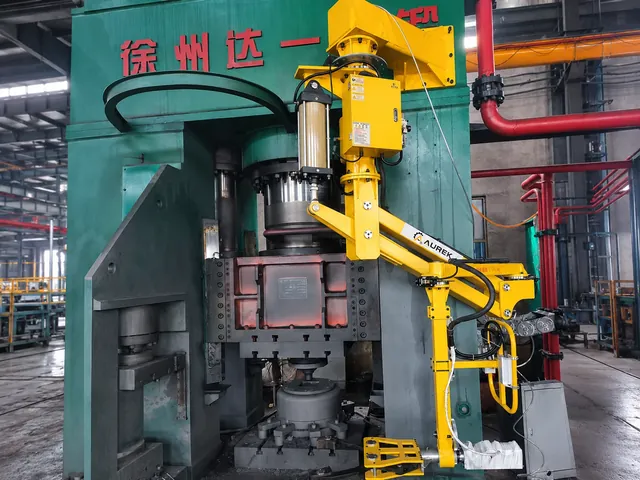 Hot casting handlingThermally Insulated Transfer of Hot Iron CastingsAn overhead-mounted pneumatic industrial manipulator with custom thermally insulated tooling grips, lifts and transfers castings weighing approximately 65 kg at approximately 250℃ between workstations, reducing direct manual support of hot workpieces.
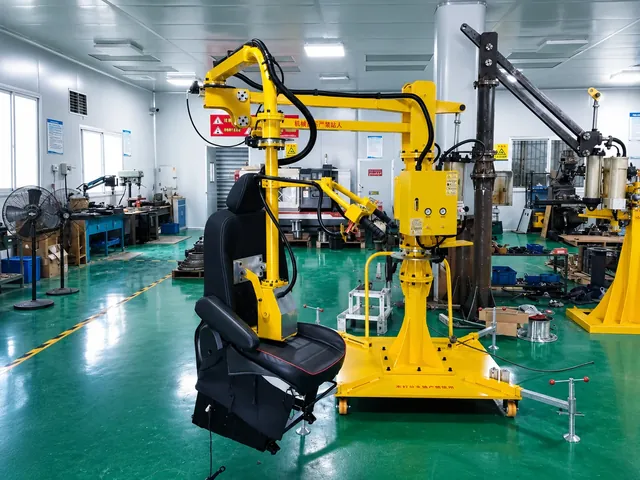 Automotive seat handlingAutomotive Seat Assembly and Transfer ApplicationA mobile-base pneumatic industrial manipulator with dedicated seat tooling assists with gripping, lifting, horizontal transfer and assembly alignment of seat assemblies. It reduces manual carrying and support at seat-assembly and final-assembly transfer stations.
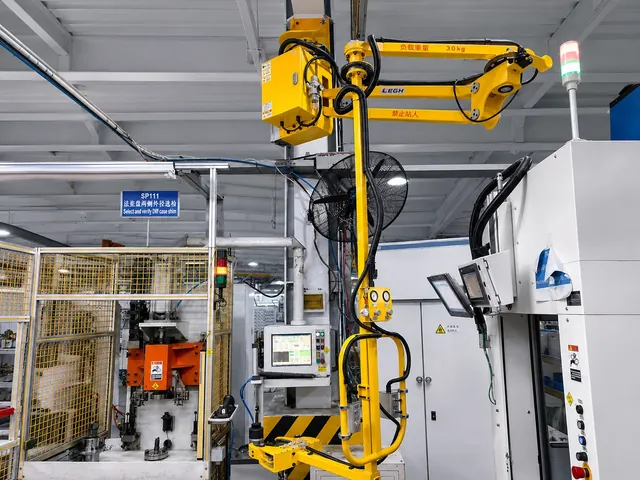 Motor stator handlingMotor Stator Handling and Transfer Between WorkstationsAn overhead-mounted pneumatic industrial manipulator with internal-expansion tooling picks stators through their bore and assists with lifting, horizontal movement and assembly positioning. It reduces repetitive manual support while leaving floor space available at fixed workstations.
Submit your requirements, get a technical proposal
Share the workpiece name, weight per workpiece, dimensions and pick-and-place motions, and an engineer will recommend a manipulator arrangement, working range and end tooling. Drawings and site photographs can be sent by email or WeChat.