
Application cases · Work roll handling
Work Roll Handling for Grinder Loading and Unloading
An overhead-mounted pneumatic industrial manipulator with adjustable tooling assists with gripping, lifting and loading or unloading work rolls at grinding equipment, reducing floor occupancy. The operator guides the roll toward the fixture and adjusts its placement position.
- Tooling
- Adjustable tooling
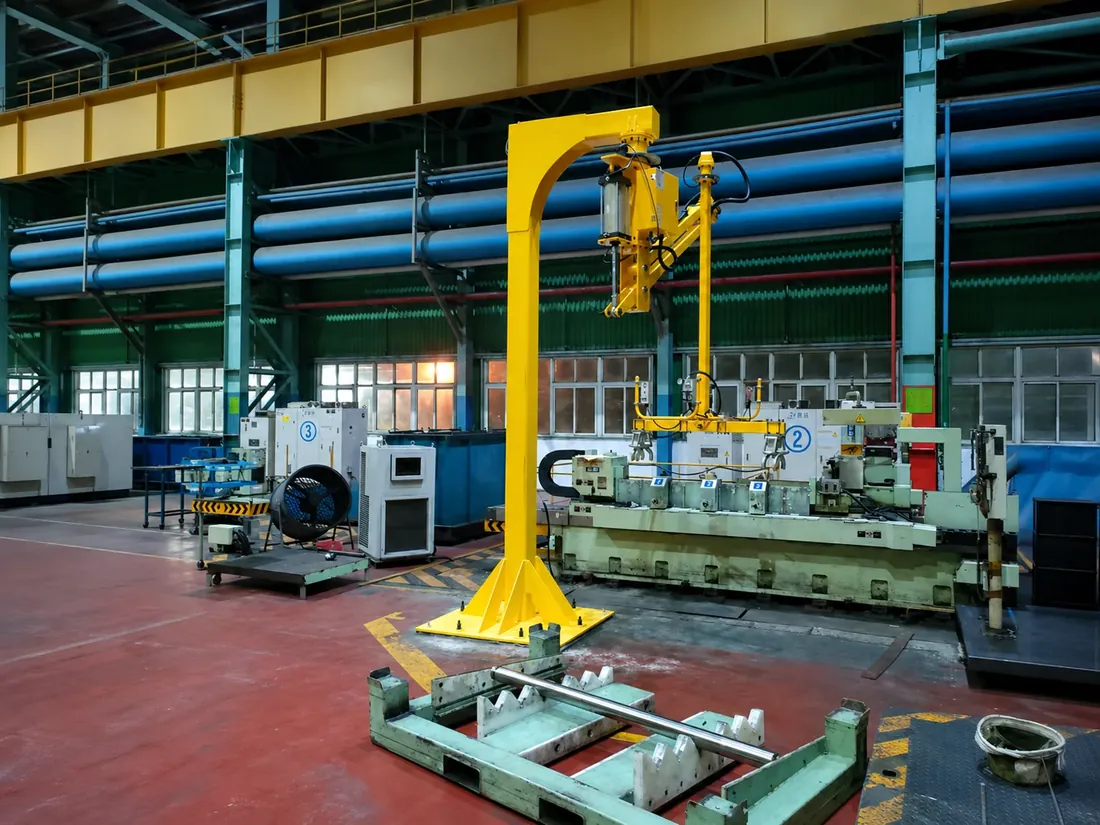 Work roll handling
Application overview
Work roll grinding requires frequent loading and unloading, and long rolls make manual lifting and alignment more difficult. An overhead-mounted pneumatic industrial manipulator covers the operating area from above, reducing floor occupancy around the grinder. Adjustable tooling grips the roll at its contact areas, the manipulator assists with lifting and transfer, and the operator aligns the roll with the fixture to connect loading and unloading motions.
System configuration
| Workpiece | Work rolls and other roll-shaped workpieces |
|---|---|
| Equipment arrangement | Overhead-mounted pneumatic industrial manipulator |
| Tooling | Adjustable tooling |
| Main motions | Gripping, lifting, transfer, alignment, loading and unloading |
| Layout features | Overhead arrangement reduces floor occupancy |
| Workstations | Work roll grinding and machining loading and unloading |
Configuration features
- The overhead manipulator covers the grinder loading and unloading positions from above, reducing floor occupancy and leaving space for operators to approach the fixture.
- The adjustable gripping structure accommodates roll diameter and contact positions, supporting size changeover within its designed adjustment range.
- The manipulator assists with supporting the roll weight while the operator guides lifting and alignment, reducing direct manual support when bringing the roll into the fixture.
Operating sequence
- Adjust the tooling to the gripping positions for the roll, guide it toward the workpiece and align with the intended contact areas.
- Grip and confirm the gripping status, then assist with lifting the roll clear of its storage support or support position in the grinder.
- Maintain the grip and guide transfer to the target position. Adjust the roll's position relative to the fixture while clearing surrounding machine structures.
- Lower the roll slowly until it is supported, then release and withdraw the tooling. For unloading, follow the sequence of gripping, transfer and placement.
Selection and configuration
- Gripping structures with a suitable adjustment range can be selected for changes in roll diameter, matching the contact areas to commonly used roll profiles.
- Tooling contact layouts can be selected for differences in roll length and support positions, leaving operating space for gripping and insertion into the fixture.
- Manipulator coverage and end arrangements can be selected for the grinder layout, connecting the storage area with loading and unloading positions.
Frequently asked questions
How does adjustable tooling handle different work roll sizes?
The contact positions can be adjusted within the tooling's designed range to match the corresponding roll diameter and length. If the size change exceeds that range, a suitable gripping structure or dedicated tooling can be selected.
How does overhead mounting support grinder loading and unloading?
The manipulator assists with lifting and transferring the roll from above, reducing floor occupancy around the equipment. The operator maintains the grip and aligns the roll with the fixture, then lowers it slowly before releasing the tooling.
More cases
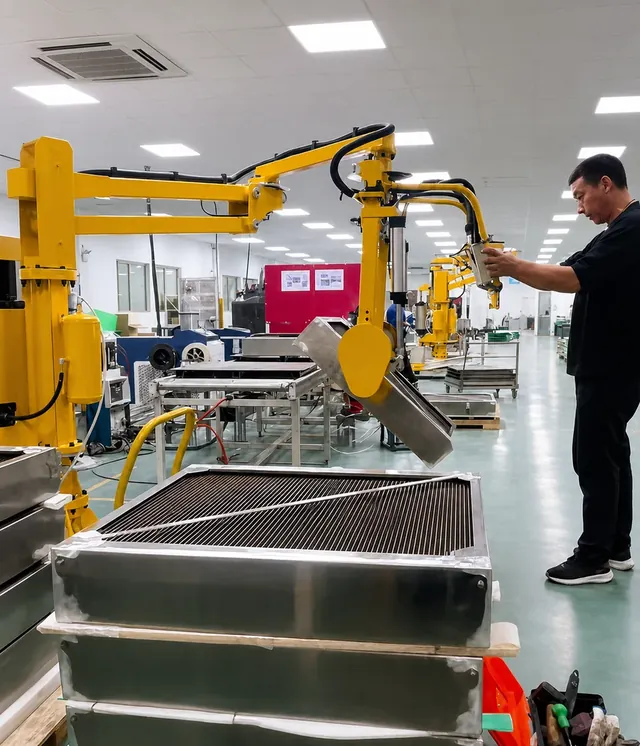 Metal workpiece turningOn-site videoLarge Metal Workpiece Handling and Turning ApplicationA pneumatic industrial manipulator with custom clamping and turning tooling carries the lifting load of large metal workpieces and turns and positions them while maintaining the grip. One operator guides pick-and-place and orientation changes.
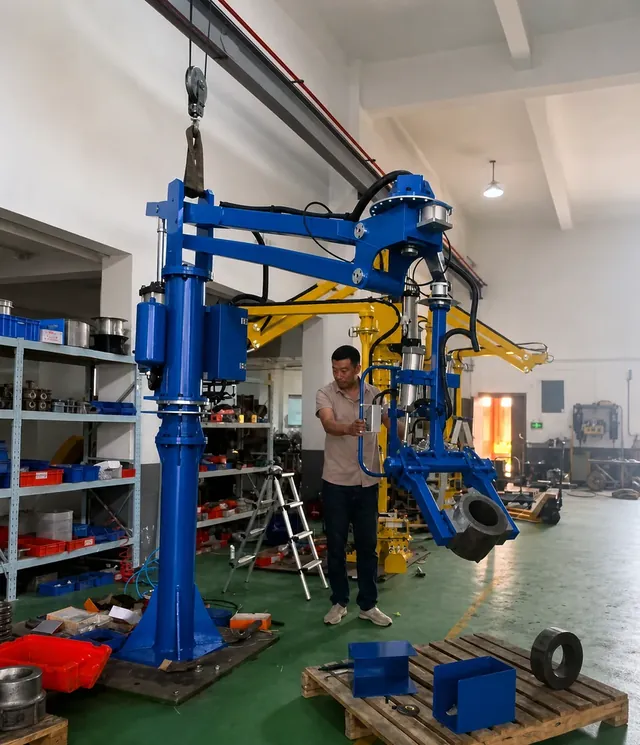 Ring turningOn-site videoRing Workpiece Handling and Turning ApplicationA pneumatic industrial manipulator with dedicated ring tooling lifts, transfers and turns ring-shaped workpieces while maintaining the grip. One operator guides orientation and position, reducing direct manual support and changes of hand position.
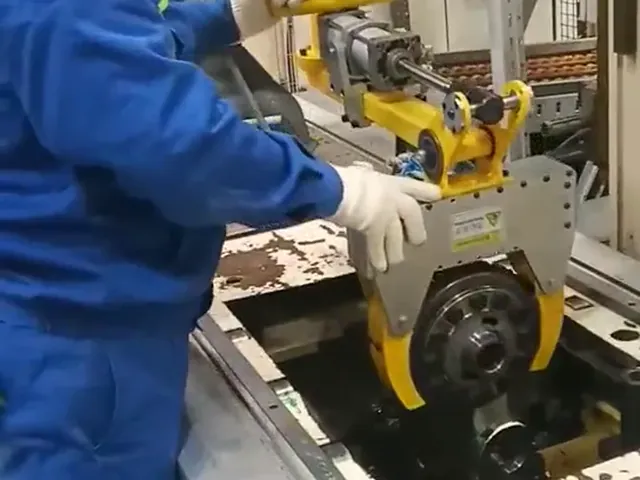 Workpiece turningOn-site videoDisc and Flange Turning, Loading and Unloading ApplicationA pneumatic industrial manipulator with custom clamping and turning tooling picks disc- and flange-shaped metal workpieces from inside equipment, withdraws, turns and places them, connecting loading and unloading with orientation changes between processes.
Submit your requirements, get a technical proposal
Share the workpiece name, weight per workpiece, dimensions and pick-and-place motions, and an engineer will recommend a manipulator arrangement, working range and end tooling. Drawings and site photographs can be sent by email or WeChat.